.svg)

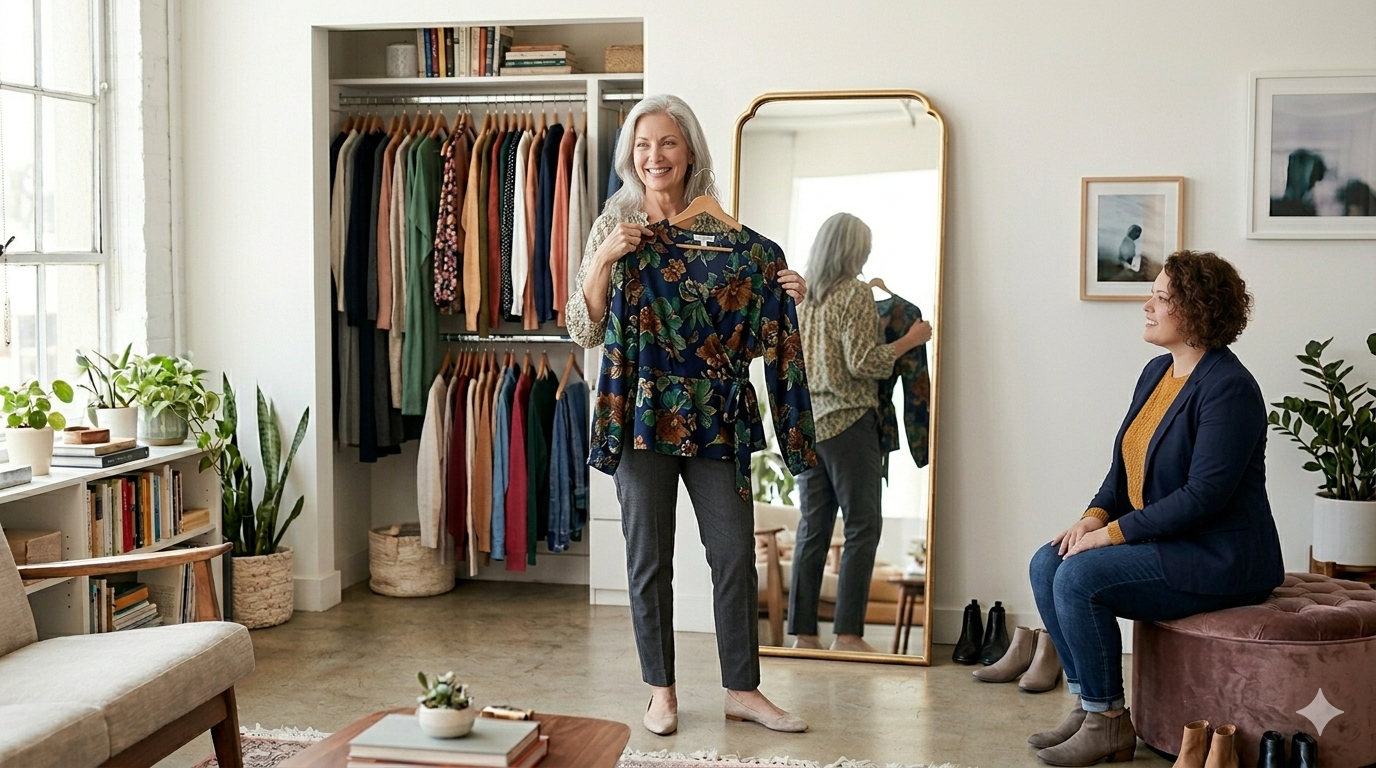
Here's a situation a lot of people find themselves in and almost nobody talks about openly: you open your closet, and nothing fits the way it used to. Maybe your body changed gradually, over years. Maybe it happened fast: a pregnancy, a health thing, a hard season of life, a really good one. Maybe you've gained weight, lost it, redistributed it, or just woken up one day and realized that the body you're dressing now is meaningfully different from the body you were dressing when you bought most of what's hanging in there.
And then comes the complicated part. Because it's not just a practical problem. It's an emotional one. Your clothes hold history. They hold the version of you that wore them, and sometimes letting go of them feels like letting go of her. We want to start by saying: that's real, and it makes complete sense, and we're not going to rush past it.
But we're also not going to leave you stuck there. Because you deserve to get dressed in the morning and feel like yourself - the self you are right now, today - and that's entirely possible. Let's figure out how.
First: Give Yourself Full Permission to Start From Where You Are
Not from where you were. Not from where you're hoping to be. From here.
This matters because so much wardrobe advice for people whose bodies have changed is quietly optimistic in a way that keeps you in limbo. Keep the smaller sizes, just in case. Hold onto that dress until you feel confident again. Wait until things settle before you invest in anything new. And look, we understand the impulse, but what it actually produces is a closet full of clothes that don't fit your life right now, and mornings that start with a low-grade sense of defeat before you've even had coffee.
You are allowed to dress the body you have today. Not as a consolation prize. As a completely legitimate, entirely worthy act of taking care of yourself.
👉 The clothes that fit you right now are not a backup plan. They're your wardrobe.
The First Thing to Do: An Honest, No-Drama Closet Pass
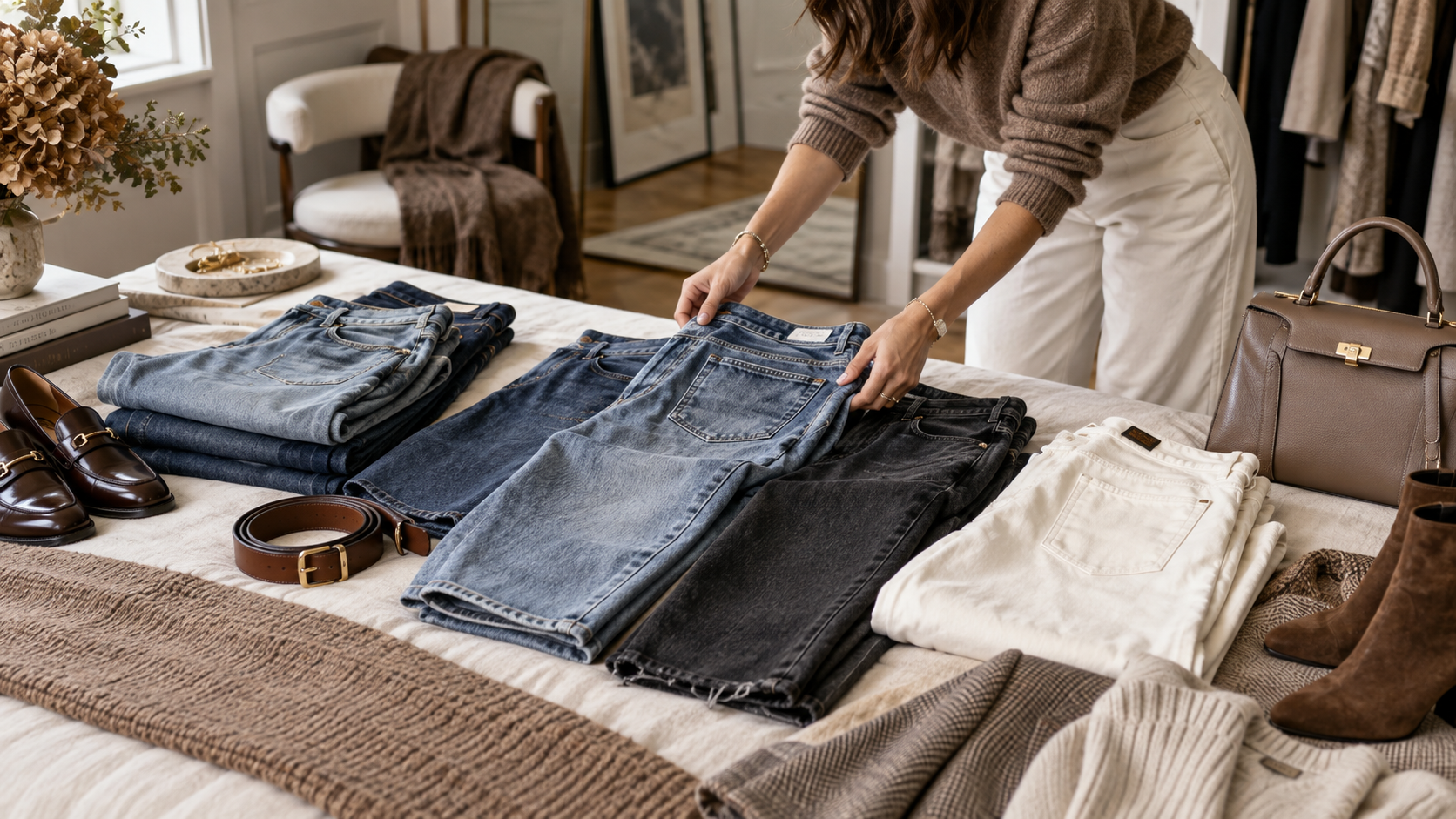
Before you buy anything, before you donate anything, before you reorganize anything, you need to know what you're actually working with. This means trying things on. Yes, actually on your body, not just eyeballing them on the hanger. We know. But this step is everything.
Go through your closet and sort into three piles:
Pile one: fits well and feels good right now. These are your active wardrobe. Everything else is going to be decided based on what's missing from this pile.
Pile two: doesn't fit, and you're genuinely uncertain whether it will again. Not hoping, not planning - genuinely uncertain. These go in a box, out of your active closet, for 90 days. Not donated or resold yet. Just out of rotation so they're not cluttering your daily choices or your headspace.
Pile three: doesn't fit, and you know in your gut you're not going back there, either because your body has fundamentally changed, or because even if it hadn't, you wouldn't want to wear it anymore. These you can let go of now. Be honest with yourself here. The kindness isn't in holding on; it's in clearing the space.
👉 A note on the "just in case" pieces: keeping one or two things that don't currently fit is fine. Keeping thirty is a different situation. If your "just in case" section is bigger than your active wardrobe, the just-in-case clothes have become your wardrobe - just one you can't actually wear. That's worth looking at.
What to Do With What's Left
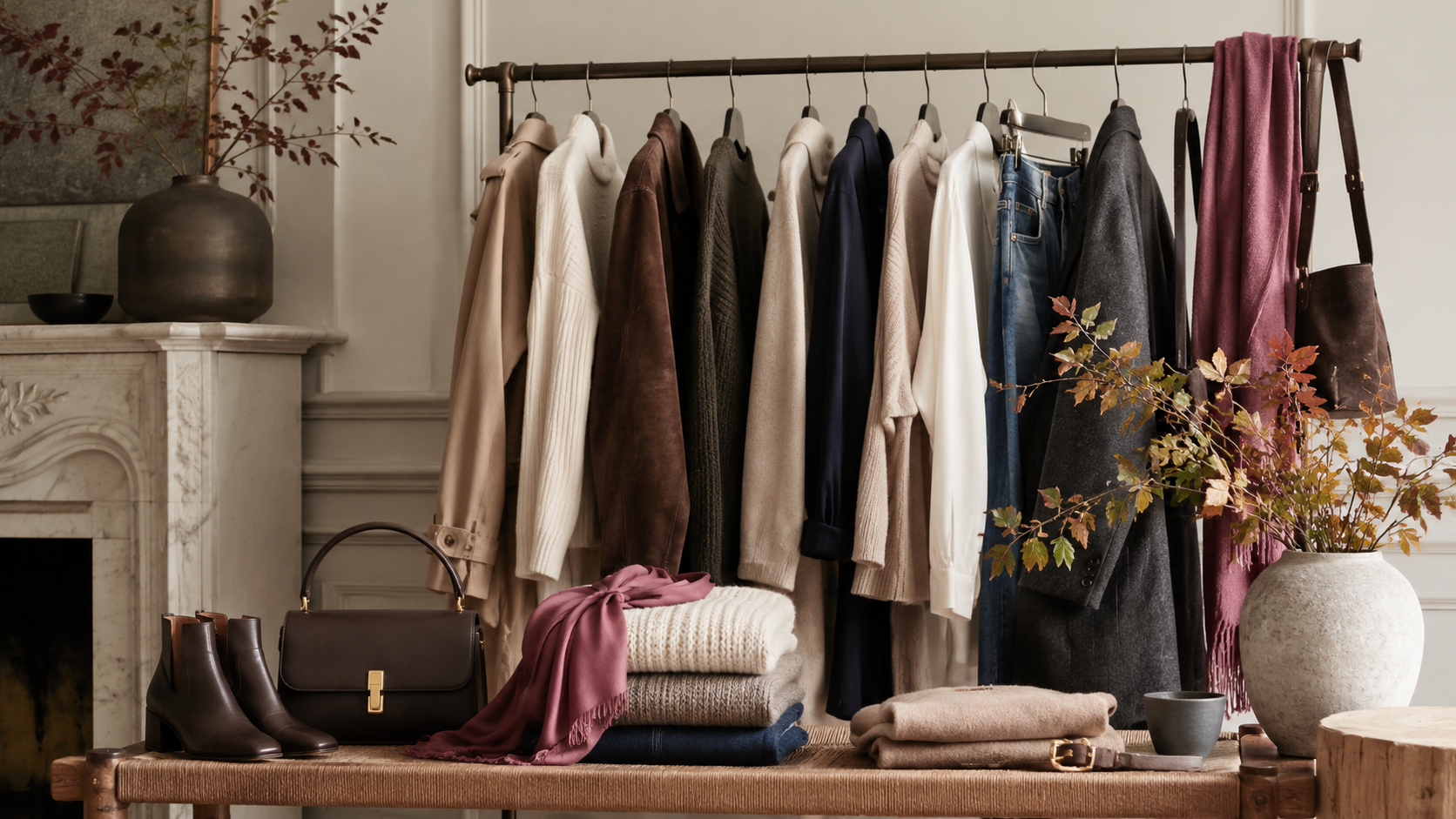
Once you know what actually fits right now, you can see clearly what you have and what you're missing. For most people whose bodies have changed, the active wardrobe has gaps; not because they don't own enough clothes, but because the pieces that fit are concentrated in certain categories and thin in others. Maybe you have plenty of tops but almost no bottoms that work. Maybe your casual clothes fit fine but your work pieces don't. Maybe everything is fine from the waist up.
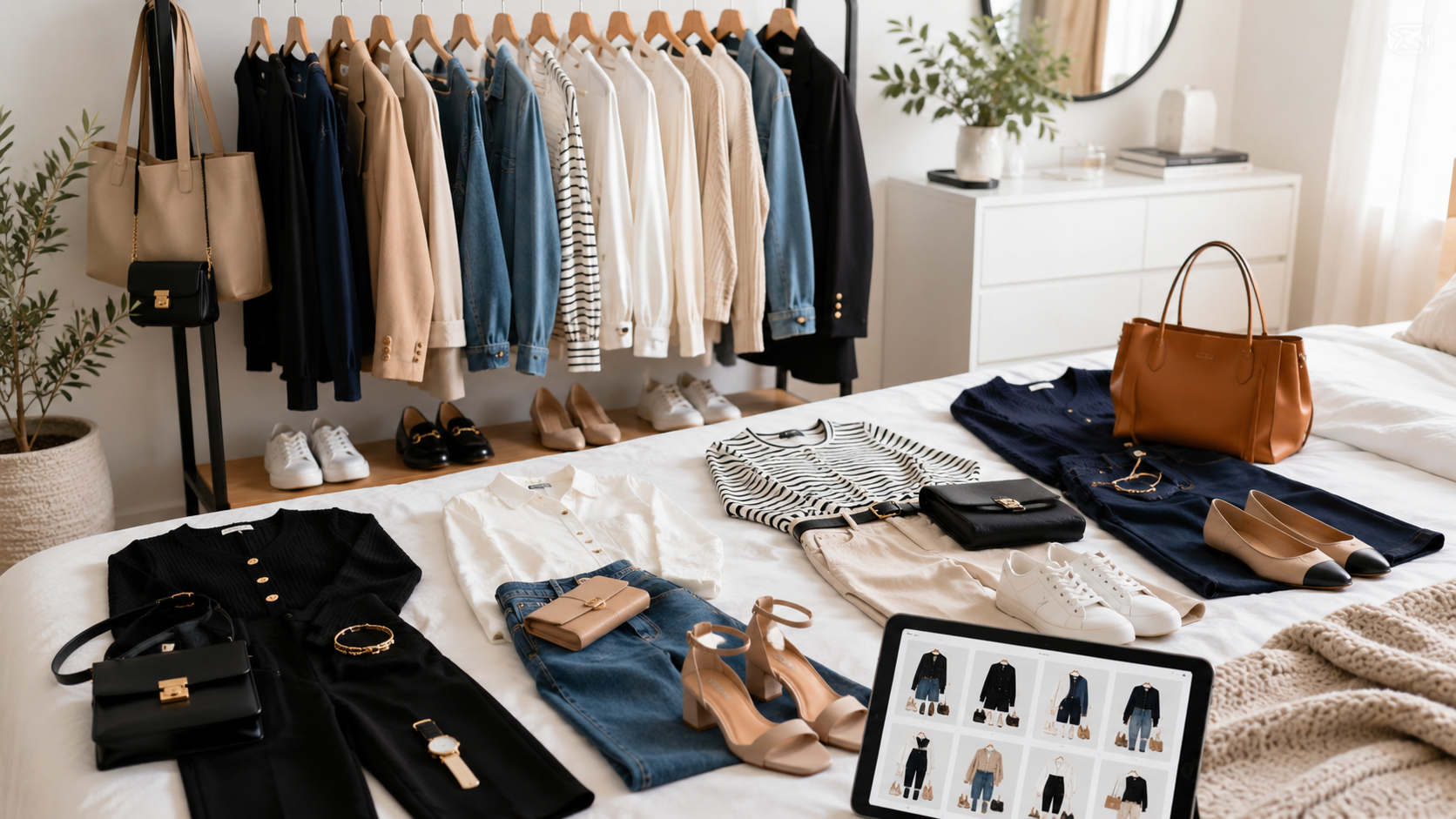
Look at what you have in pile one and ask: what kinds of outfits can I actually build from this? Where are the holes? This tells you, specifically, what's worth addressing and whether that means going deeper into your own closet, altering something, or selectively buying a thing or two.
Making More of What Already Fits
Before you spend a single dollar, look at what pile one is missing and see if anything in your closet can fill it with a small adjustment. Specifically:
Tailoring is more powerful than most people realize. A blazer that used to fit perfectly and now pulls across the shoulders might be one seam away from working again. A pair of trousers that no longer closes at the waist can sometimes be let out. Anything too big can usually be taken in. If you haven't talked to a tailor about a specific piece, you might be surprised what's possible. A good tailor is often cheaper than buying a replacement, and the piece already exists in your closet.
Styling shifts can do more than you'd think. A top that fits differently now might work tucked differently, layered differently, or styled open over something else. Before you write something off entirely, see if it has a new life in a new configuration. This isn't about tricks to "hide" anything, it's about recognizing that the way you've always worn something isn't the only way to wear it.
Proportion adjustments. If your body's shape has shifted, your old proportion instincts might need recalibrating, not because anything is wrong with your body, but because different shapes create different visual relationships between pieces. A silhouette that felt right before might feel off now, and a different one might feel better. Try things you wouldn't have reached for before. You might be pleasantly surprised.
When It Actually Makes Sense to Buy Something
We're not going to tell you never to buy anything. That's not realistic, and it's not what this is about. But the goal is to buy intentionally: a few right things that fill real gaps, rather than a lot of things that feel like solutions in the store and turn into clutter at home.
The pieces most worth buying when your body has changed are the ones that do the most work across the most outfits. Think: one or two pairs of trousers or jeans in your current size that fit well and go with everything, a few tops in your current fit that serve as reliable building blocks, one layer - a blazer, a cardigan, a denim jacket - that grounds everything else. These aren't exciting purchases. They're infrastructure. And infrastructure is what makes the rest of your wardrobe function.
What's less worth buying right now: statement pieces, trend pieces, anything highly specific to one occasion, and anything you're buying because it's on sale and it almost fits. The "almost fits" purchase is one of the most common and most expensive wardrobe mistakes. It's optimistic in exactly the same way as keeping the just-in-case pile, and it produces the same outcome. Things you own but can't wear.
👉 A useful rule for new purchases right now: before you buy it, you should be able to name three things you already own that you'd wear it with. If you can't get to three, it's not the right piece yet, no matter how good it looks on the hanger.
A Note on Every Specific Kind of Body Change
Because bodies change in different ways, and different situations come with different feelings:
If you've gained weight
The clothes in your closet that don't fit are not a rebuke. They're just clothes in the wrong size, and size is a number on a tag that means nothing about who you are or what you deserve to wear. Get dressed in things that fit you now, that feel good now. You are not waiting to deserve a wardrobe. You have one.
If you've lost weight
This one's often framed as purely positive, and sometimes it is, but it can also come with its own complicated feelings, especially if the change happened due to illness, stress, or grief. Clothes that now swim on you can feel disorienting in a different way. The same rules apply: work with what fits, tailor what's close, let go of what's too far gone. Your wardrobe should reflect the body you actually have, whatever the story behind it.
If you're postpartum
Your body just did something extraordinary. It also may feel unfamiliar, uncomfortable, and like it belongs to everyone except you. Give yourself a wide berth here, both emotionally and practically. What you need right now is comfort, functionality, and feeling like a person. This is not the moment for capsule wardrobe optimization. Pull out the things that fit and feel okay, and focus entirely on that bar: fits and feels okay. Everything else can wait.
If your body has changed with age
This is the most gradual and often the least acknowledged. Things shift - in shape, in proportion, in what feels comfortable and what doesn't - and it happens slowly enough that most people don't update their wardrobe to match. What worked at 35 might just feel slightly off at 55, not because anything is wrong, but because you're a different person now with a different body and different needs. Treat this as an opportunity to recalibrate, not a loss to mourn. The clothes that feel right now might be better than what you had before. That's genuinely possible.
The Thing That Ties All of This Together
Whatever kind of change you're navigating, the through-line is the same: dress the person you are right now. Not as a plan B, not as a temporary measure, not while you wait for something else to happen. Now.
Getting dressed in things that actually fit, that actually feel good, that actually reflect who you are today - that's not settling. That's the whole point. That's what a wardrobe is for.
You don't owe anyone a body that never changes. And you don't owe yourself a closet full of evidence that it once was different.
Frequently Asked Questions
What should I do with clothes that no longer fit after a body change?
Start with a three-pile sort: clothes that fit well now (keep and wear), clothes you're genuinely uncertain about (box them for 90 days and see if you miss them), and clothes you know you're not going back to (let go now). This takes the pressure off a single big decision and lets reality guide what stays and what goes.
Should I keep clothes that don't fit in case my body changes back?
Keeping a small number of pieces you're genuinely uncertain about makes sense. 90 days in a box is a reasonable test. But keeping a large "just in case" section means you're living in two wardrobes and functioning fully in neither. If the pieces you can't wear outnumber the ones you can, something needs to shift.
How do I build outfits when my body has changed and my wardrobe doesn't fit right?
Start by identifying what does fit well and feel good. That's your active wardrobe foundation. Look at what kinds of outfits you can build from those pieces, and find the gaps. Before buying anything, check whether tailoring or restyling existing pieces can fill those gaps. Then buy only the specific things that your active wardrobe genuinely needs.
Is it worth tailoring clothes that no longer fit after weight changes?
Often, yes. Tailoring is frequently cheaper than replacing a piece, and it works in both directions: taking things in when you've lost weight, letting things out when you've gained it (up to the limits of the seam allowance). Talk to a tailor before you donate a piece you love but that no longer fits. You might be surprised what's possible.
What pieces are worth buying when your body has changed?
Prioritize wardrobe infrastructure over statement pieces: one or two pairs of well-fitting trousers or jeans, a few reliable tops in your current fit, and one versatile layering piece. These do the most work across the most outfits and make the rest of what you own function better. Before buying anything, be able to name three existing pieces you'd wear it with.
How do I dress well postpartum when nothing seems to fit right?
Lower the bar intentionally. The goal right now is: fits and feels okay. Not stylish, not optimized, not put-together in the way you used to be - just comfortable and functional and like you're wearing clothes that belong to you. Pull those pieces to the front. Everything else can wait. You're not behind on anything.
What's the difference between dressing for the body you have versus giving up on your appearance?
Dressing for the body you have is the opposite of giving up. It's actively choosing to take care of yourself as you actually are. Giving up looks like avoiding mirrors, avoiding getting dressed intentionally, wearing things that don't fit because you don't feel you deserve ones that do. Dressing for your current body looks like making real choices, wearing things that fit and feel good, and showing up for your own life in the body you have right now.