.svg)

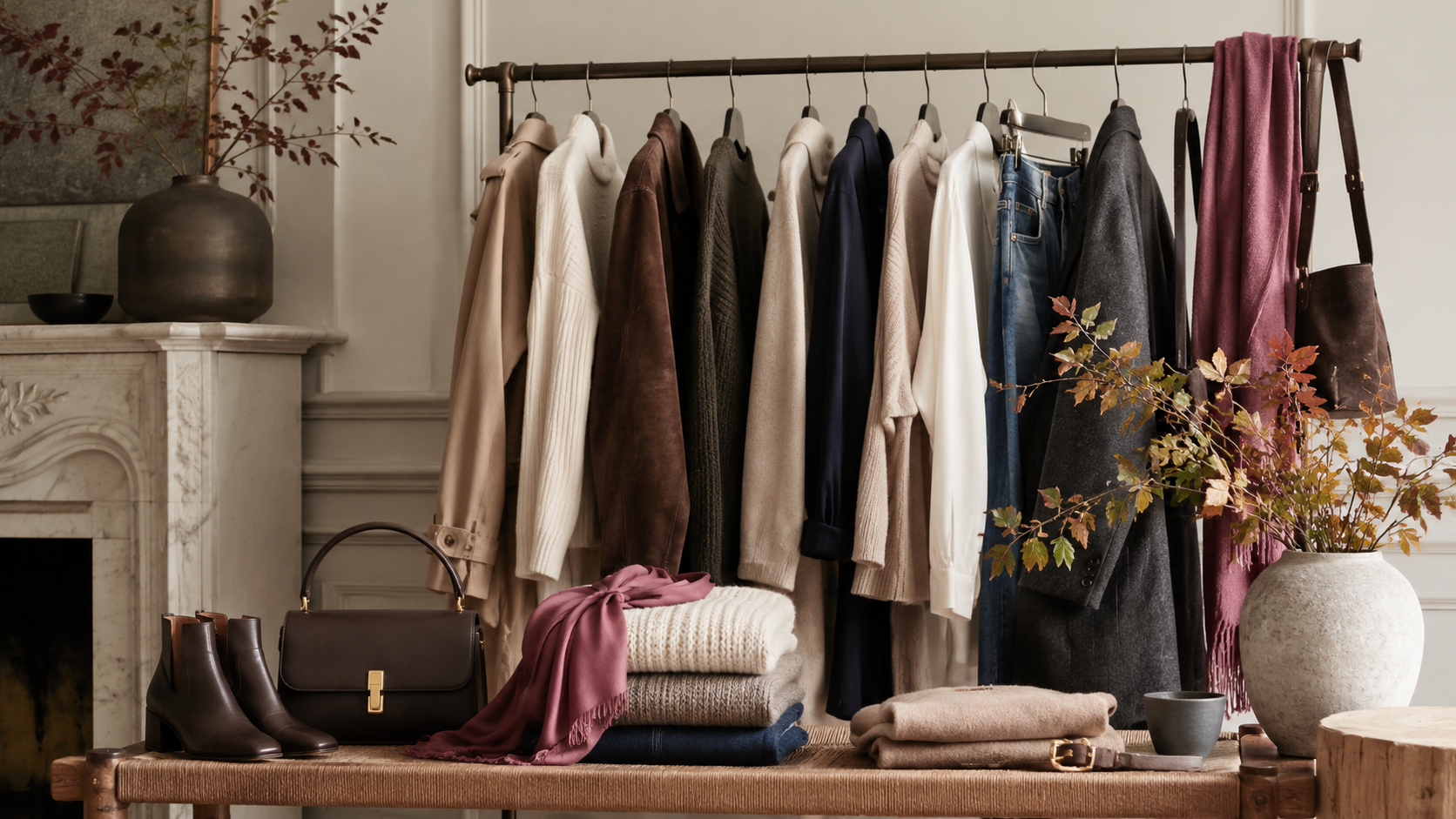
You've heard the rule. Maybe you've even followed it, at least for a while. Buy a new top, donate an old one. New boots in, old boots out. Simple, elegant, deeply satisfying in theory. And yet, somehow, your closet is still packed, you still feel like you have nothing to wear, and that pile of "maybe someday" items is quietly expanding in the corner. The one in, one out rule isn't broken. It's just incomplete. Here's what to do instead.
Why One In, One Out Falls Short
The rule has good intentions. It's trying to solve two real problems: closet overcrowding and mindless shopping. And it does make you pause before a purchase, which is genuinely useful. But it has a few critical blind spots that nobody talks about.
First, it treats all items as equal. One blouse in, one blouse out - but what if the blouse you're removing was a wardrobe workhorse you wore twice a week, and the one coming in is a trend piece you'll wear twice total? You've technically followed the rule and made your wardrobe quietly worse.
Second, it only activates at the moment of purchase. It does nothing about the clothes already sitting in your closet that haven't moved in two years. Those pieces aren't counted, aren't reviewed, and don't trigger anything. They just accumulate.
Third, and this is the one that really gets people, it creates a false sense of balance. You think you're managing your wardrobe because you're following a rule. But a closet can stay exactly the same size while the quality, usefulness, and joy of what's inside it slowly deteriorates. Volume isn't the problem. Composition is.
👉 One in, one out keeps your closet the same size. What you actually want is a closet that keeps getting better.
The Better System: Three Moves Instead of One
The upgrade isn't complicated. It's just more honest about how wardrobes actually work over time. Instead of one rule, you make three moves; and you only need to do the full version twice a year.
Move 1: The Swap (what one in, one out already does)
Keep this part. When something new comes in, something goes out. But add one constraint: the item leaving has to be genuinely comparable to the item arriving. A dress replaces a dress. A pair of trousers replaces a pair of trousers. This prevents the slow accumulation of "exceptions" - the new thing you just had to have that somehow doesn't displace anything because nothing in your closet is quite like it.
If you can't identify a direct replacement, that's actually useful information. It means either the new item is filling a real gap (great, it earns its place), or it's a duplicate of something you already have (in which case, something does need to go, you just have to look a little harder).
Move 2: The Seasonal Audit (twice a year, 30 minutes)
Every time the season changes - spring/summer and fall/winter - do a single pass through your closet with one question per item: did I wear this in the last twelve months? Not "could I wear this," not "will I wear this someday," not "I paid a lot for this." Did I actually wear it?
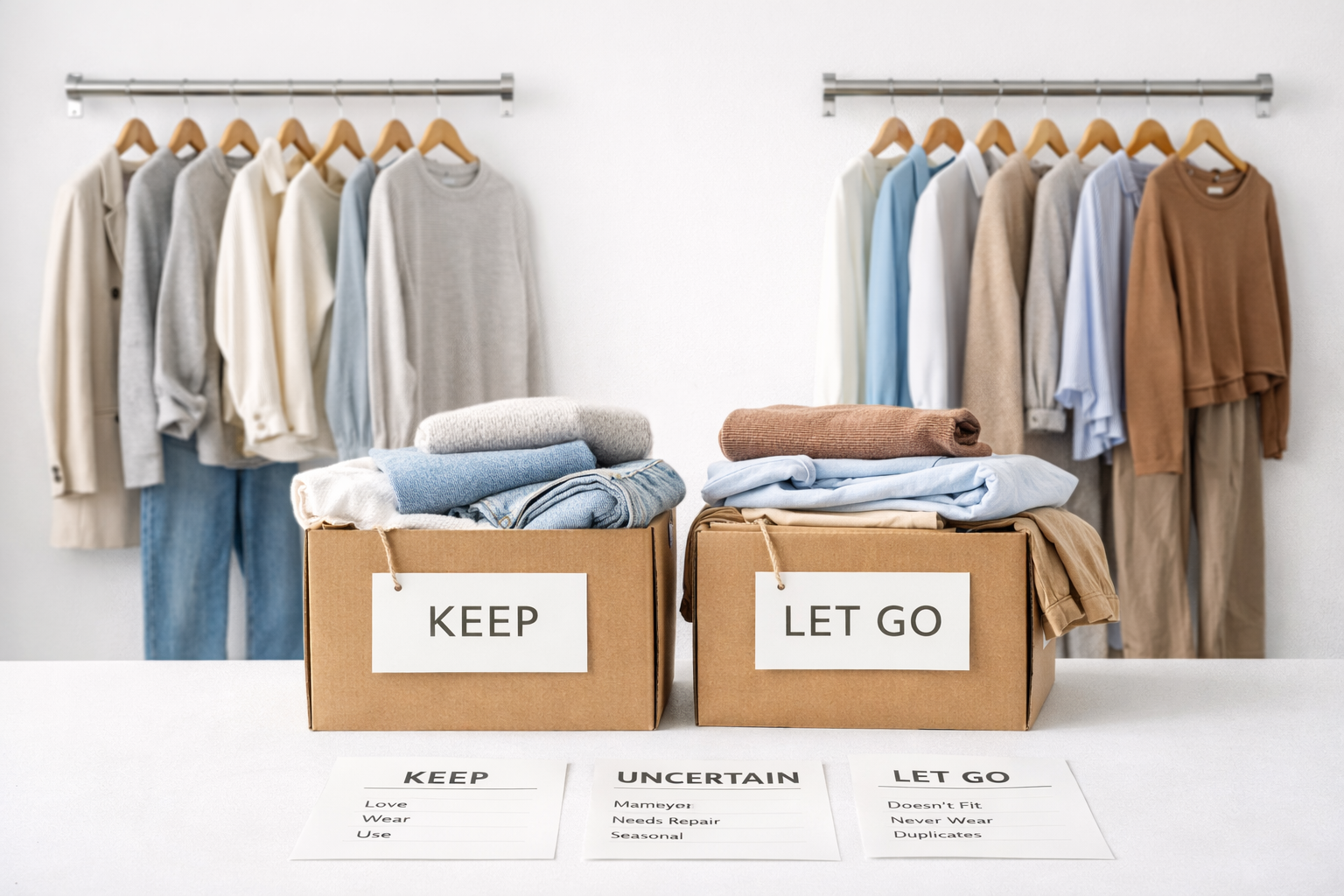
If the answer is no, it goes in a box. Not donated yet, just a box. Give it 30 days. If you find yourself going to that box to retrieve something, it stays. If you don't miss it at all, it goes. This two-step process removes the guilt and the panic from the decision. You're not giving it away forever in that moment; you're just testing whether you actually need it.
👉 The 30-day box method works because it separates the emotional moment of deciding from the practical reality of missing something. Almost no one ever goes back to the box. But knowing you could makes it easier to let go.
Move 3: The Annual Composition Check (once a year, 20 minutes)
This is the one most people skip, and it's the most valuable. Once a year - pick a date and put it in your calendar - you look at your wardrobe not item by item, but as a whole. You're asking: does this collection of clothes actually support the life I'm living right now?
This is where most wardrobes quietly fall apart. You have twelve tops and four bottoms. You have eight pairs of shoes but only three that work with anything. You have plenty of "going out" pieces and almost nothing for the actual life you lead most days. The composition check surfaces these imbalances so you can address them, not by shopping, but by redistributing what you already have, moving things out that aren't serving you, and getting clear on the one or two genuine gaps that are actually worth filling.
👉 The goal isn't a smaller wardrobe. It's a wardrobe where almost everything earns its place.
What "Earning Its Place" Actually Means
Here's a useful reframe: instead of thinking about how many items you have, think about what each item is doing for you. A piece earns its place if it does at least one of these things consistently:
It gets worn regularly. Not once a year for a specific occasion but regularly, across different contexts and combinations. If you're building outfits around it, it's earning its place.
It serves a specific, irreplaceable function. Your one formal dress might only come out twice a year, but when you need it, nothing else will do. That's still earning its place. The question is whether you actually need that specific function covered.
It brings you genuine joy when you put it on. Not "this is fine" or "it fits okay." Actual, positive feeling. This is a real criterion and it's worth taking seriously. Getting dressed in something that makes you feel like yourself is not a luxury, it's the whole point.
If a piece fails all three of these, it's not earning its place. And the honest truth is that in most people's closets, somewhere between 20 and 40 percent of what's hanging there fails all three. The one in, one out rule does nothing about those pieces. Your seasonal audit and composition check do.
How to Handle the Emotional Stuff
Let's be real for a second. The reason most wardrobe systems fail isn't because people don't understand the logic. It's because clothes carry feelings. The dress you wore to your friend's wedding. The jeans from before everything changed. The gift from someone you loved. This stuff is real, and pretending it isn't is why most decluttering advice feels bad.
Here's our take: keep what you want to keep. Seriously. If something has sentimental value that outweighs its practical value, that's a completely legitimate reason to hold onto it. Just be honest with yourself that that's what you're doing. Store it somewhere intentional, not mixed in with things you're actually trying to wear. A memory box, the back of a shelf, whatever works. The goal is that your active wardrobe - the stuff you're working with every day - is full of things that serve you now.
The items that are harder are the ones that used to serve you and don't anymore: the size you're hoping to get back to, the style you thought you'd grow into, the "investment piece" that turned out to be an expensive mistake. These are the ones worth having an honest conversation with yourself about. Not a harsh one, a kind one. The kindest thing you can do for your future self is not make her dig through a closet full of the past every single morning.
👉 Try this: if you're on the fence about something, ask yourself: "If I saw this in a store today, would I buy it?" Not "is it nice" or "is it in good condition." Would you actually buy it, knowing what you know about your life and your wardrobe right now? If the answer is no, that tells you something.
The Shopping Side of the System
A better maintenance system also changes how you shop. When you're doing your composition check annually and your seasonal audit twice a year, you actually know what you need. Not what you want in the abstract, not what caught your eye on a Tuesday - what your wardrobe is actually missing.
This is genuinely powerful. Walking into a store (or opening a tab) knowing that you need one pair of versatile trousers in a neutral and one lightweight layer for spring is a completely different experience than browsing with a vague sense of dissatisfaction. You stop buying things that are nice and start buying things that are right.
And when you do buy something that's right, something that fills a real gap, works with what you already have, and you can see yourself wearing regularly - the one in, one out swap at the end of the process feels clean and easy. Because you're not just displacing a random item. You're making a considered upgrade.
The Full System, In Plain English
Here's the whole thing, simplified:
Every time you buy something new: identify a direct, comparable replacement and let it go. If you can't find one, figure out whether you're filling a gap or making a duplicate and act accordingly.
Twice a year, at season change: spend 30 minutes asking whether you actually wore each piece in the last year. Anything with a "no" goes in a box for 30 days. What you don't retrieve gets donated.
Once a year: spend 20 minutes looking at your wardrobe as a whole. Is the balance right? Do your clothes match your actual life? What functions are overcovered? What's genuinely missing? Adjust based on what's there, not what you could buy.
That's it. Three moves, twice-yearly check-in, one annual review. Your closet doesn't just stay manageable, it gets meaningfully better every year.
Frequently Asked Questions
Why doesn't the one in, one out rule work long-term?
The one in, one out rule only activates at the point of purchase and treats all items as interchangeable. It doesn't address the pieces already in your wardrobe that you're not wearing, and it doesn't evaluate whether your overall wardrobe composition actually supports your life. Over time, you can follow the rule perfectly and still end up with a closet full of things that don't work together or for you.
How often should I do a wardrobe audit?
Twice a year is the sweet spot for most people: once at the start of spring/summer and once at the start of fall/winter. This aligns naturally with seasonal shifts when you're already touching and reassessing your clothes. A full composition check once a year on top of that keeps the bigger picture in view.
What's the 30-day box method?
Instead of donating or reselling items immediately during a closet audit, you place anything you're uncertain about in a box and set it aside for 30 days. If you go looking for something from the box, it comes back into your wardrobe. If the 30 days pass and you haven't missed it, you donate without guilt. It removes the pressure from the initial decision and lets reality, not feelings, make the call.
How do I know if a piece is worth keeping?
Ask whether it gets worn regularly, serves a specific irreplaceable function in your life, or brings you genuine positive feeling when you wear it. If it doesn't do at least one of these things consistently, it's likely not earning its place. A useful shortcut: if you saw it in a store today, would you actually buy it?
What about clothes I'm keeping for sentimental reasons?
Sentimental value is a completely legitimate reason to keep something, just be honest that that's why you're keeping it, and store it separately from your active wardrobe. Mixing sentimental pieces into your working closet makes it harder to get dressed and harder to see clearly what you actually have.
How do I stop buying things I don't need?
The composition check is the best tool for this. When you know specifically what your wardrobe is missing, you shop with intention instead of vague dissatisfaction. You stop buying things that are nice and start buying things that are right for your actual wardrobe and life.