.svg)

Summer dressing would be easier if the weather were the only problem.
But no. The real challenge is that outside feels like a sidewalk griddle, while inside feels like someone set the office thermostat to “arctic expedition.” You dress for the heat, then spend the next six hours wrapped around your iced coffee for warmth. You dress for the AC, then step outside and immediately regret having a body.
It is a very specific kind of wardrobe chaos.
The goal is not to carry your entire closet around just in case. The goal is to build outfits that can handle both: heat, humidity, sunshine, sweat, overzealous air conditioning, cold conference rooms, chilly restaurants, grocery stores, movie theaters, airports, and offices where the vents seem to have personal issues.
Here’s how to dress when it’s hot outside and freezing indoors.
Quick answer: dress in light layers, not heavy layers
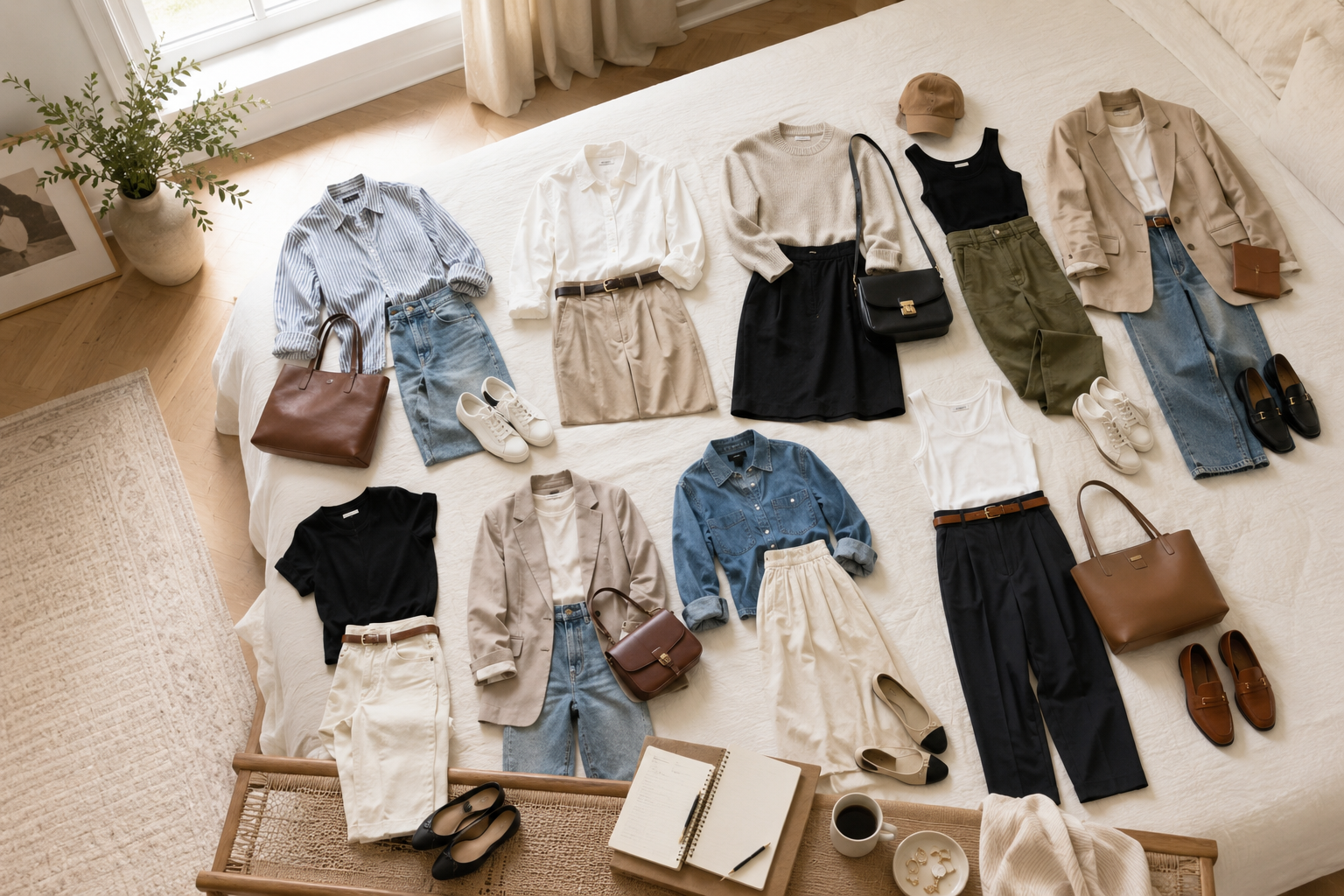
When it is hot outside and cold inside, the best outfit formula is:
Breathable base + easy removable layer + seasonally appropriate shoes + one practical accessory.
For example:
- Linen trousers + tank + lightweight button-down
- Summer dress + cropped cardigan + sandals
- Tailored shorts + ribbed tank + cotton overshirt
- Slip skirt + tee + denim jacket
- Wide-leg pants + sleeveless top + lightweight blazer
- Jeans + breathable blouse + thin sweater over your shoulders
The key is choosing layers that help indoors without making you miserable outdoors. This is not the moment for heavy knits, thick hoodies, or jackets that feel like a portable sauna.
You want pieces that are light, breathable, easy to carry, and intentional enough to look like part of the outfit.
Why this outfit problem is so annoying
Hot-outside-cold-inside dressing is hard because you are not dressing for one environment. You are dressing for a temperature argument.
Outside, your priorities are:
- Breathability
- Sun protection
- Sweat management
- Easy movement
- Light colors and fabrics
- Shoes that do not make your feet overheat
Inside, your priorities become:
- Covered arms
- Warm shoulders
- Less exposed skin
- Shoes that do not feel too bare
- Layers that make a summer outfit feel appropriate in cooler spaces
That is why a simple tank and shorts can feel perfect outside but too exposed indoors. It is also why jeans and a blazer may feel fine in an office but deeply rude to your future self during a 20-minute walk in the heat.
The solution is not “dress warmer.” The solution is to make your outfit adjustable.
Start with the base layer
Your base layer is the outfit you are wearing when the extra layer comes off. It should work on its own outdoors and still look intentional indoors.
Good summer base layers include:
- Ribbed tanks
- Sleeveless blouses
- Lightweight tees
- Linen shirts
- Cotton poplin tops
- Simple dresses
- Slip skirts
- Tailored shorts
- Linen trousers
- Wide-leg cotton pants
- Lightweight denim
- Breathable jumpsuits
The base layer should be comfortable enough for heat but polished enough that you do not feel underdressed when you remove your jacket or sweater.
A good question to ask: Would I still like this outfit if I had to carry my layer all day?
If the answer is no, fix the base outfit first.
Choose breathable fabrics first
When you are moving between hot and cold spaces, fabric matters more than almost anything.
Look for:
Linen
Linen is one of the best hot-weather fabrics because it breathes well and does not cling as much as many synthetic fabrics. It works especially well for trousers, shirts, shorts, dresses, and lightweight jackets.
Yes, it wrinkles. That is linen’s whole personality. Choose linen pieces with enough structure if you want the look to feel polished rather than “I slept in this, emotionally and physically.”
Cotton
Cotton is easy, breathable, and practical. A cotton button-down, poplin shirt, or lightweight cardigan can be an excellent indoor layer.
Cotton tees and tanks also work well as base layers because they are comfortable in heat and easy to style.
Tencel, lyocell, and modal
These fabrics often feel soft, light, and fluid. They can work beautifully for pants, dresses, skirts, and tops when you want drape without heaviness.
Just check whether the fabric clings when you sit or sweats easily in high heat.
Lightweight denim or chambray
Chambray and lightweight denim shirts are great summer layers. They add coverage indoors but still feel casual and seasonal.
A heavy denim jacket may work in some places, but if you are walking outside in serious heat, lighter is better.
Fine knits
A thin cotton or linen-blend knit can be useful in AC. Think lightweight cardigan, fine sweater, or knit tee—not chunky fall knitwear trying to cosplay as July.
Avoid thick polyester, heavy ponte, stiff synthetic blends, and anything that traps heat outside but somehow still fails to keep you comfortable inside. Very rude behavior from fabric.
The best layers for cold indoor spaces
The right layer should be easy to put on, take off, carry, and style.
1. Lightweight button-down shirt
This is one of the most versatile summer layers.
Wear it:
- Open over a tank
- Buttoned over a bralette or camisole
- Tied at the waist
- Half-tucked into trousers or shorts
- Over a dress as a casual jacket
Best fabrics: cotton, linen, cotton poplin, chambray.
A button-down gives arm coverage indoors without feeling too heavy outside. It also adds polish, which is helpful if your base outfit is very simple.
2. Cropped cardigan
A cropped cardigan works especially well with dresses, high-rise skirts, wide-leg pants, and tailored shorts.
It adds warmth around your shoulders and arms without swallowing the outfit. Choose a lightweight knit in cotton, linen, or a thin blend.
A cardigan is also easy to throw into a tote, tie over your shoulders, or keep at your desk.
3. Linen or cotton blazer
A lightweight blazer is ideal when you need to look polished but still survive summer.
Try it with:
- Tank + linen trousers
- Sleeveless blouse + wide-leg pants
- Dress + flat sandals
- Tailored shorts + simple tee
- Slip skirt + ribbed tank
Avoid heavy lined blazers if you will be outside for more than a few minutes. You want structure, not a personal greenhouse.
4. Denim or chambray shirt
A denim shirt is usually easier than a denim jacket in summer because it is lighter and less bulky.
Wear it open over a dress, tank, or tee. It adds casual structure and works especially well with white, cream, black, olive, tan, and brighter summer colors.
5. Thin sweater over your shoulders
The sweater-over-the-shoulders move is practical and useful. It keeps the layer available without making you carry it in your hands, and it adds polish to simple outfits.
Try it with:
- Tank dress
- Tee and shorts
- Linen trousers and sleeveless top
- Button-down and jeans
- Midi skirt and tank
Just choose a lightweight sweater. This is not the time for your chunky cable knit to make a guest appearance.
6. Lightweight utility jacket
A lightweight utility jacket works well for casual offices, travel days, errands, and weekend outfits.
It gives more coverage than a shirt but still feels more relaxed than a blazer. Choose a soft cotton or lightweight twill version rather than anything stiff or heavy.
7. Scarf or wrap
A scarf or wrap is useful in places where the AC is unpredictable: airports, planes, restaurants, theaters, conference rooms, and offices.
Choose a lightweight cotton, linen, silk, or modal scarf. It can cover your shoulders indoors and fit into a bag when you do not need it.
A scarf is also very useful if you want arm coverage but do not want a full jacket.
Outfit formulas for hot outside, freezing inside
Use these as starting points from clothes you may already own.
Formula 1: The office AC outfit
Wear:
- Sleeveless blouse or ribbed tank
- Wide-leg trousers
- Lightweight blazer or cardigan
- Loafers, flats, or polished sandals
Why it works: the base outfit is breathable, but the layer makes it office-ready when the AC is working overtime and frankly needs a hobby.
Formula 2: The restaurant outfit
Wear:
- Midi dress
- Cropped cardigan or lightweight button-down
- Flat sandals or low heels
- Small bag
Why it works: the dress keeps you cool outside, while the cardigan or shirt covers your shoulders indoors.
Formula 3: The errands outfit
Wear:
- Tailored shorts
- Cotton tee or tank
- Open button-down shirt
- Sneakers or sandals
Why it works: the outfit feels casual and practical, but the shirt gives just enough coverage when you walk into a cold grocery store.
Formula 4: The travel outfit
Wear:
- Pull-on linen or cotton trousers
- Soft tee or tank
- Lightweight sweater
- Sneakers
- Scarf or wrap
Why it works: you can handle hot sidewalks, chilly airport terminals, cold planes, and the emotional journey of gate changes.
Formula 5: The casual office outfit
Wear:
- Lightweight jeans or cotton trousers
- Sleeveless knit or tee
- Chambray shirt or linen blazer
- Loafers or clean sneakers
Why it works: the outfit balances comfort and polish. The layer looks intentional, not like you panicked in the car.
Formula 6: The summer event outfit
Wear:
- Slip skirt or tailored shorts
- Simple tank
- Lightweight blazer, cardigan, or wrap
- Sandals or flats
Why it works: the base is summery, but the layer helps if the venue is cold or the event moves indoors.
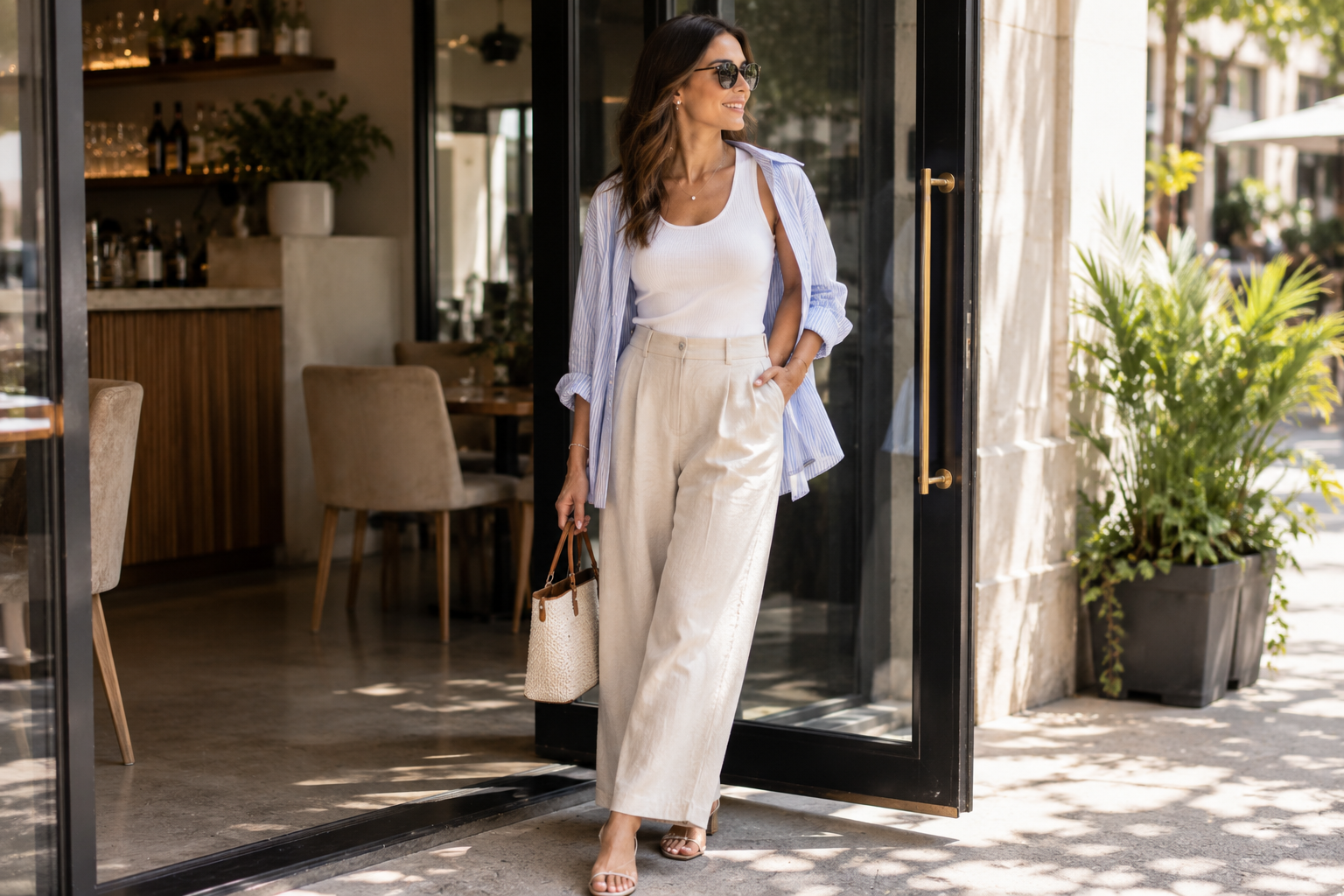
Formula 7: The weekend city outfit
Wear:
- Linen trousers
- Fitted tank
- Cotton button-down worn open
- Leather sandals or clean sneakers
- Sunglasses
Why it works: the button-down acts like a light jacket without making the outfit feel heavy.
What to wear on top when you hate cardigans
Cardigans are useful. They are also not everyone’s personality. If a cardigan makes you feel like you accidentally aged into someone else’s PTA meeting, skip it.
Try these instead:
- Oversized cotton shirt
- Linen blazer
- Cropped denim shirt
- Lightweight bomber
- Chambray overshirt
- Fine-gauge sweater
- Utility jacket
- Buttoned vest over a tank
- Scarf or wrap
You do not need to force a piece just because it is practical. Practical pieces still need to feel like you.
What shoes work for both temperatures?
Shoes are tricky because your feet may be hot outside but cold indoors. Very dramatic of them, but understandable.
Good options:
Closed-toe flats
Ballet flats, Mary Janes, loafers, and other closed-toe flats can work well when sandals feel too bare indoors.
They are especially useful for offices, restaurants, events, and travel.
Clean sneakers
Sneakers are practical for walking outside and comfortable inside. Choose a cleaner pair if the outfit needs to feel more polished.
Slingbacks or low heels
These can give polish without making the outfit feel too heavy. They are useful for work, dinners, and summer events.
Refined sandals
Leather sandals, slides, and minimal flat sandals can still work indoors if the rest of the outfit has enough coverage or polish.
If your indoor environment is truly freezing, open sandals may not be your best all-day choice. Cute, yes. Functional, questionable.
What to keep at your desk, in your car, or in your bag
If you regularly deal with aggressive AC, build a small backup system.
Useful items to keep nearby:
- Lightweight cardigan
- Thin sweater
- Cotton button-down
- Scarf or wrap
- Socks for travel days
- Foldable flats
- Hair clip or tie
- Small deodorant
- Mini lint roller
This is not overpacking. This is climate strategy.
If you work in an office, consider keeping one neutral layer at your desk that works with most of your summer outfits. Cream, navy, gray, black, camel, olive, or denim are usually easy to repeat.
How to make layers look intentional, not random
A layer looks intentional when it connects to the rest of the outfit.
Try one of these tricks:
Repeat a color
If your cardigan matches your shoes, bag, belt, or print, it looks planned.
Example: cream cardigan + cream sandals + navy dress.
Match the level of polish
A linen blazer works with tailored trousers. A denim shirt works with casual shorts. A fine cardigan works with dresses and skirts.
The pieces do not need to match exactly, but they should feel like they are going to the same place.
Use proportion
If your base outfit is loose, choose a shorter or more structured layer. If your base outfit is fitted, an oversized shirt or relaxed blazer can work well.
Style the layer before you need it
Tie the shirt around your waist, drape the sweater over your shoulders, or roll the sleeves of your blazer. If it looks like part of the outfit before you put it on, it will look more natural when you do.
How to dress for different cold-indoor situations
Cold office
Choose breathable trousers or a skirt, a sleeveless or short-sleeve top, and a lightweight blazer, cardigan, or overshirt.
Avoid relying only on a tank and sandals unless your office is very casual and you have a backup layer.
Cold restaurant
Bring a cropped cardigan, wrap, or lightweight blazer. Restaurants can be especially cold because you are sitting still, which makes the AC feel even more intense.
Cold grocery store
An open button-down, denim shirt, or light overshirt is usually enough. Bonus points if it can be tied around your waist outside.
Cold movie theater
Bring a real layer. Movie theaters are not playing around. A sweater, soft jacket, or scarf is your friend.
Cold airplane
Wear or bring socks, a scarf, and a lightweight sweater or jacket. Even if it is hot where you are leaving from, the plane has chosen winter as a lifestyle.
Cold conference room
Choose polish and warmth: wide-leg trousers, a breathable top, a blazer or cardigan, and closed-toe shoes. Conferences often involve long stretches of sitting, so dress for stillness, not just walking between sessions.
What not to wear when you’ll be hot outside and cold inside
Avoid outfits that only work for one climate.
Too little coverage
A tiny tank, shorts, and sandals might be perfect outside, but miserable indoors if you are sitting in AC for hours.
Too much bulk
Heavy jeans, thick jackets, and dense sweaters may work indoors, but outside they can make you feel trapped.
Synthetic layers that don’t breathe
Some synthetic fabrics hold heat outside but still leave you cold indoors. A truly impressive failure.
Shoes that only make sense outdoors
Very bare sandals may feel great in heat but leave you cold indoors, especially in offices, restaurants, or planes.
Layers that are annoying to carry
If the layer is bulky, heavy, or wrinkles badly when carried, you will resent it. Choose something easy.
How to use OpenWardrobe to plan better hot-cold outfits
Use OpenWardrobe to save outfit formulas that work for both temperatures.
Start by creating a few hot-outside-cold-inside outfit combinations from pieces you already own. Then save them by situation:
- Office AC outfits
- Summer restaurant outfits
- Travel day outfits
- Cold grocery store outfits
- Casual indoor-outdoor weekend outfits
- Summer event backup-layer outfits
You can also track which outfits you actually wear and which ones you avoid. If you keep skipping the same summer dress because it only works outside, maybe it needs a cardigan, shirt, or better shoe pairing. If you avoid certain trousers because they feel too hot, save them for cooler days and build a lighter alternative.
The point is not to create more outfit rules. It is to make getting dressed easier when the forecast says summer but the building says refrigerator.
Final thought: dress for the full day, not just the first ten minutes
When it is hot outside and freezing indoors, the best outfit is not the coolest outfit or the warmest outfit. It is the most adaptable one.
Start with a breathable base. Add a light layer. Choose shoes that make sense for the places you are actually going. Keep one backup piece nearby if you deal with cold indoor spaces often.
Your clothes should help you move through the day, not make you choose between sweating outside and shivering inside.
The weather may be confused. Your outfit does not have to be.