.svg)

Shorts should be easy. They are, in theory, one of the simplest summer items: two leg openings, less fabric, done.
And yet.
For a lot of people, shorts are weirdly difficult. They ride up. They pinch. They gap. They feel too casual, too revealing, too “camp counselor,” too “I have given up,” or somehow all of the above. You buy a pair thinking they’ll solve summer dressing, then they sit in your wardrobe while you reach for the same dress, linen pants, or old gym shorts again.
The problem usually isn’t your body. It’s the shorts.
More specifically, it’s the combination of length, rise, fabric, and fit. When those four things work together, shorts can become an actual wardrobe staple. When one of them is off, they become the item you keep trying on and taking off before leaving the house.
Here’s how to choose shorts you’ll actually wear.
Quick answer: the best shorts are the ones that match your real life
Before we get into inseams and waistbands, start here: what do you need your shorts to do?
Are they for walking around the city? Working from home? Vacation dinners? School pickup? Hot-weather errands? Casual Fridays? Hiking? Looking polished without boiling alive?
The best pair of shorts for you depends less on what is “flattering” in the abstract and more on whether the shorts work for your body, your wardrobe, your climate, and your actual calendar.
A good pair of shorts should:
- Feel comfortable when you sit, walk, and bend
- Work with at least three tops you already own
- Match the level of polish your life requires
- Stay in place without constant adjusting
- Make you feel like yourself, not like you borrowed someone else’s summer personality
Now let’s get specific.
1. Start with length: where should shorts hit?
Shorts length changes everything. The same body can look and feel completely different in a 3-inch inseam, a 5-inch inseam, a 7-inch inseam, or a knee-length pair.
There is no universally “best” shorts length. There is only the length that works for your proportions, comfort level, and outfit goals.
Short shorts: 3–4 inch inseam
Shorter shorts can be great if you like showing more leg, want a casual summer look, or prefer less fabric in hot weather. They often work well with relaxed shirts, oversized button-downs, simple tanks, swimsuits, and vacation pieces.
They may not be your best everyday option if you spend a lot of time sitting, walking long distances, or feeling like you need to tug the hem down every six minutes. If the shorts pass the standing-in-front-of-the-mirror test but fail the “walk two blocks” test, they are not your shorts. They are decorative stress.
Mid-length shorts: 5–7 inch inseam
This is often the most wearable range for many people. Mid-length shorts give some coverage while still feeling summery. They can work casually with tees and sandals, or more polished with a button-down, belt, and loafers or flat sandals.
If you are unsure where to start, try this range first. It is usually easier to style than very short shorts and less visually heavy than longer shorts.
Longer shorts: 8–10 inch inseam
Longer shorts, including Bermuda-style shorts, can look chic and intentional when the fit and fabric are right. The trick is avoiding anything too stiff, too baggy, or too tight at the knee.
Longer shorts tend to work best when they look deliberate: think tailored linen, crisp cotton, denim with structure, or a soft trouser-style short. Pair them with cleaner tops, tucked or semi-tucked shirts, simple tanks, refined sandals, loafers, or sneakers that feel polished rather than gym-bound.
Knee-length and below
Knee-length shorts can be stylish, but they need a little more thought. Because they cover more leg, they can shorten the visual line of the body if the proportions are off. That doesn’t mean you can’t wear them. It means the styling matters.
Try pairing longer shorts with a more defined waist, a top that is not too long, and shoes that keep the look light. A monochrome or low-contrast outfit can also help create a longer line.
2. Choose the right rise for your body and your tops
Rise is the distance between the crotch seam and the waistband. It determines where the shorts sit on your body: low-rise, mid-rise, or high-rise.
The right rise affects comfort, proportions, and how easy the shorts are to style with the tops you already own.
High-rise shorts
High-rise shorts sit at or near the natural waist. They can help define the waist, lengthen the leg line, and work well with cropped tops, tucked shirts, bodysuits, and shorter sweaters or jackets.
They are especially useful if you like outfit formulas such as:
- High-rise shorts + tucked tee + belt
- High-rise linen shorts + tank + open button-down
- High-rise denim shorts + fitted top + relaxed blazer
The catch: high-rise shorts need enough room through the seat and stomach. If they dig in when you sit down, they are not “motivating.” They are just uncomfortable. Clothes do not get extra points for being rude.
Mid-rise shorts
Mid-rise shorts usually sit slightly below the natural waist. They are often the easiest for everyday wear because they work with a wide range of tops and don’t demand as much styling commitment as very high-rise or low-rise shorts.
If you like a more relaxed, less “styled” look, mid-rise shorts may be your sweet spot.
Low-rise shorts
Low-rise shorts sit lower on the hips. They are more trend-driven and can feel easy and casual, especially with relaxed tees, tanks, swimwear, or vacation outfits.
But low-rise is not automatically comfortable. If you are constantly pulling them up, checking the back waistband, or adjusting the crotch, they are not doing their job.
The right rise should let you move through your day without thinking about your shorts the whole time.
3. Pick fabric based on the job
Fabric determines how shorts hang, breathe, stretch, wrinkle, and recover. This is where many shorts go wrong.
You may love the idea of a certain pair, but if the fabric doesn’t match your lifestyle, they will stay in the drawer.
Cotton shorts
Cotton shorts are breathable, easy, and classic. They work well for casual outfits and warm weather. Look for cotton with a little structure if you want polish, or softer cotton if comfort is the main goal.
Best for: everyday wear, casual errands, relaxed summer outfits.
Watch out for: cotton that is too thin, which can cling, wrinkle dramatically, or become see-through in lighter colors.
Linen shorts
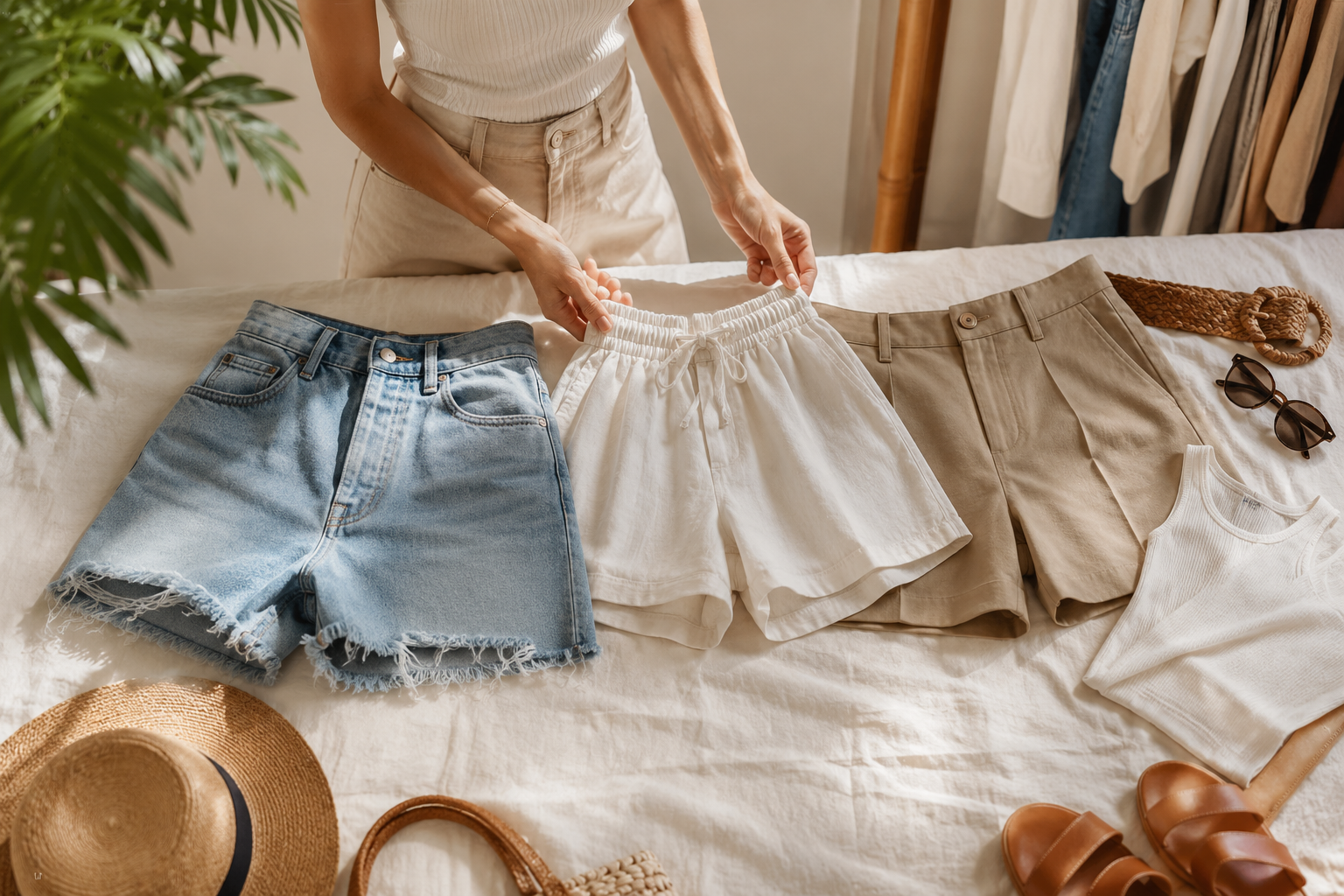
Linen is excellent in heat because it breathes beautifully. Linen shorts can look relaxed, elegant, and very summer-in-a-good-way.
The wrinkle factor is real, but it’s not always a problem. Linen is supposed to look lived-in. The key is choosing linen shorts that still have enough shape. A flat front, clean waistband, or subtle pleat can make linen look intentional rather than “I sat down once and lost the will to continue.”
Best for: hot weather, vacation, casual polish, summer dinners.
Watch out for: linen that is too sheer, too floppy, or too tight. Tight linen wrinkles aggressively and usually does not forgive.
Denim shorts
Denim shorts are a summer classic, but they are also where many people suffer unnecessarily. Stiff denim, too-short inseams, and waistbands that dig in can make denim shorts feel like a personal attack.
Look for denim shorts with enough room through the thigh and seat. A slightly relaxed leg opening is usually easier to wear than a tight one. If you want a cleaner look, try a finished hem instead of heavy distressing.
Best for: casual outfits, weekend wear, travel, concerts, beach towns, easy everyday looks.
Watch out for: denim that is too tight at the thigh. If the hem cuts into your leg when you sit, skip it.
Tailored fabrics
Tailored shorts in cotton twill, lightweight wool blends, Tencel, or structured linen can look more polished. These are the shorts that can work for casual offices, dinners, city trips, and outfits where you want to look put-together without wearing a skirt or dress.
Best for: smart casual dressing, work-from-home days, travel, summer events.
Watch out for: fabrics that wrinkle badly at the crotch or pull across the hips.
Stretch fabrics
A little stretch can make shorts more comfortable, especially for movement. But too much stretch can make shorts cling, bag out, or lose shape during the day.
Best for: active days, travel, casual wear, sitting for long periods.
Watch out for: thin stretch fabric that highlights every seam, pocket, and underwear line.
4. Fit: what to check before you buy or keep a pair
This is where you save yourself from the fantasy version of the shorts.
Do not judge shorts only while standing still in front of a mirror. Shorts must pass movement tests.
The waistband test
The waistband should sit comfortably without digging, gapping, or sliding down. You should be able to breathe, sit, and eat lunch like a person with organs.
If the waist gaps but the hips fit, tailoring may help. If the waist digs but the rest fits, try a different rise, size, or cut.
The seat test
Turn around. The shorts should have enough room across the seat without pulling, flattening, or creating horizontal strain lines.
If they look fine from the front but not from the back, they are not fine. You deserve 360-degree peace.
The thigh test
The leg opening should skim rather than squeeze. If the hem grips your thigh, the shorts may ride up as you walk. If there is too much extra fabric, they may feel bulky or sloppy.
A little ease through the thigh usually makes shorts more comfortable and more flattering.
The sitting test
Sit down. This is non-negotiable.
Ask yourself:
- Do they ride up too much?
- Does the waistband dig in?
- Does the front bunch awkwardly?
- Do you feel exposed?
- Are you already thinking about changing?
If yes, they are not an everyday pair.
The walking test
Walk around for a minute. If the shorts immediately crawl upward, twist, or need adjusting, pay attention. That will not magically improve once you are outside, sweating, holding coffee, and pretending everything is fine.
5. Match your shorts to your wardrobe
A pair of shorts can fit beautifully and still be wrong for your wardrobe.
Before buying new shorts, ask: what will I wear these with?
You should be able to make at least three outfits from pieces you already own. For example:
Denim shorts
Try them with:
- A white tee and sandals
- A button-down shirt and sneakers
- A tank and lightweight cardigan
- A striped top and leather slides
Linen shorts
Try them with:
- A matching or tonal linen shirt
- A ribbed tank and flat sandals
- A crisp tee and woven belt
- A lightweight sweater for cooler evenings
Tailored shorts
Try them with:
- A tucked tee and loafers
- A sleeveless blouse and sandals
- A button-down and belt
- A simple tank and blazer
Athletic or casual pull-on shorts
Try them with:
- A fitted tank and open shirt
- A clean tee and minimal sneakers
- A sweatshirt and slides
- A matching color top for a more intentional set
If the shorts only work with one imaginary top you do not own, pause. That is how one “easy summer basic” becomes a small unpaid internship for your wardrobe.
6. Choose shorts for your real style personality
Not everyone wants the same kind of shorts. That sounds obvious, but it is easy to forget when shopping.
If your style is classic, you may feel best in tailored cotton, chino, denim, or linen shorts in neutral colors.
If your style is relaxed, you may prefer pull-on shorts, soft linen, washed cotton, or easy denim.
If your style is dramatic, you might like longer tailored shorts, bold colors, interesting belts, or strong proportions.
If your style is romantic, you may prefer softer fabrics, subtle volume, scalloped edges, gentle prints, or fluid shapes.
If your style is sporty, you may actually enjoy athletic-inspired shorts, but style them with more intentional pieces so they feel like an outfit, not laundry day.
The goal is not to find “the best shorts.” The goal is to find your shorts.
7. What to avoid when choosing shorts
A few red flags:
Shorts that only look good from one angle
If they require a very specific stance, lighting setup, and emotional support team, leave them.
Shorts that are too tight in the thigh
This is one of the biggest reasons shorts ride up. Try a larger size, different cut, or wider leg opening.
Shorts that are too long for the shoes you wear
Longer shorts can look great, but they often need the right shoe. If you mostly wear chunky sneakers, some long shorts may feel heavier. Try them with lighter sandals, loafers, or lower-profile sneakers.
Shorts that don’t match your tops
If all your tops are long and oversized, very voluminous shorts may feel shapeless. If all your tops are cropped, very low-rise shorts may feel too exposed. Think in outfits, not single items.
Shorts bought for a fantasy lifestyle
If you do not go to yacht lunches, music festivals, coastal Italian markets, or minimalist desert retreats, no judgment. Same. Buy for the life you actually dress for.
8. How to decide whether to keep shorts you already own
Before buying new shorts, audit the ones in your wardrobe.
Try on each pair and ask:
- Do they fit my body today?
- Can I sit and walk comfortably in them?
- Do I like how I feel in them?
- Can I make at least three outfits with them?
- Did I wear them last summer?
- If not, why not?
- Would a small alteration make them work?
Sometimes the answer is not “get rid of them.” It might be:
- Hem them shorter
- Take in the waist
- Replace the button
- Style them with a different top
- Save them for beach or lounge days
- Resell or donate them if they no longer fit your life
Your wardrobe does not need more guilt. It needs better information.
9. The OpenWardrobe way to find your best shorts
Use OpenWardrobe to make choosing shorts less random.
Start by adding your shorts to your digital wardrobe. Then look at what you actually wear them with. Are there pairs you keep styling again and again? Are there pairs you never choose? Are your most-worn shorts all the same length, fabric, or rise?
That pattern is useful. It tells you what your real-life style is doing, not what your shopping brain thinks might happen someday.
You can also save outfit combinations with your favorite shorts, test new pairings, and identify what is missing before buying anything new. Maybe you do not need another pair of shorts. Maybe you need a better summer top, a belt, a sandal that changes the outfit, or a simple alteration.
That is the difference between buying more and dressing better.
Final thought: shorts should make summer easier
The right shorts are not the ones a trend report, influencer, or dressing room mirror tells you to buy.
They are the ones you reach for without negotiation.
They fit your waist and your life. They work with your tops. They survive sitting down. They do not require constant tugging, explaining, or emotional recovery.
So before you buy another pair, check the four things that matter most: length, rise, fabric, and fit.
When those are right, shorts stop being the awkward item at the back of the drawer and start becoming what they were always supposed to be: an easy summer win.