.svg)

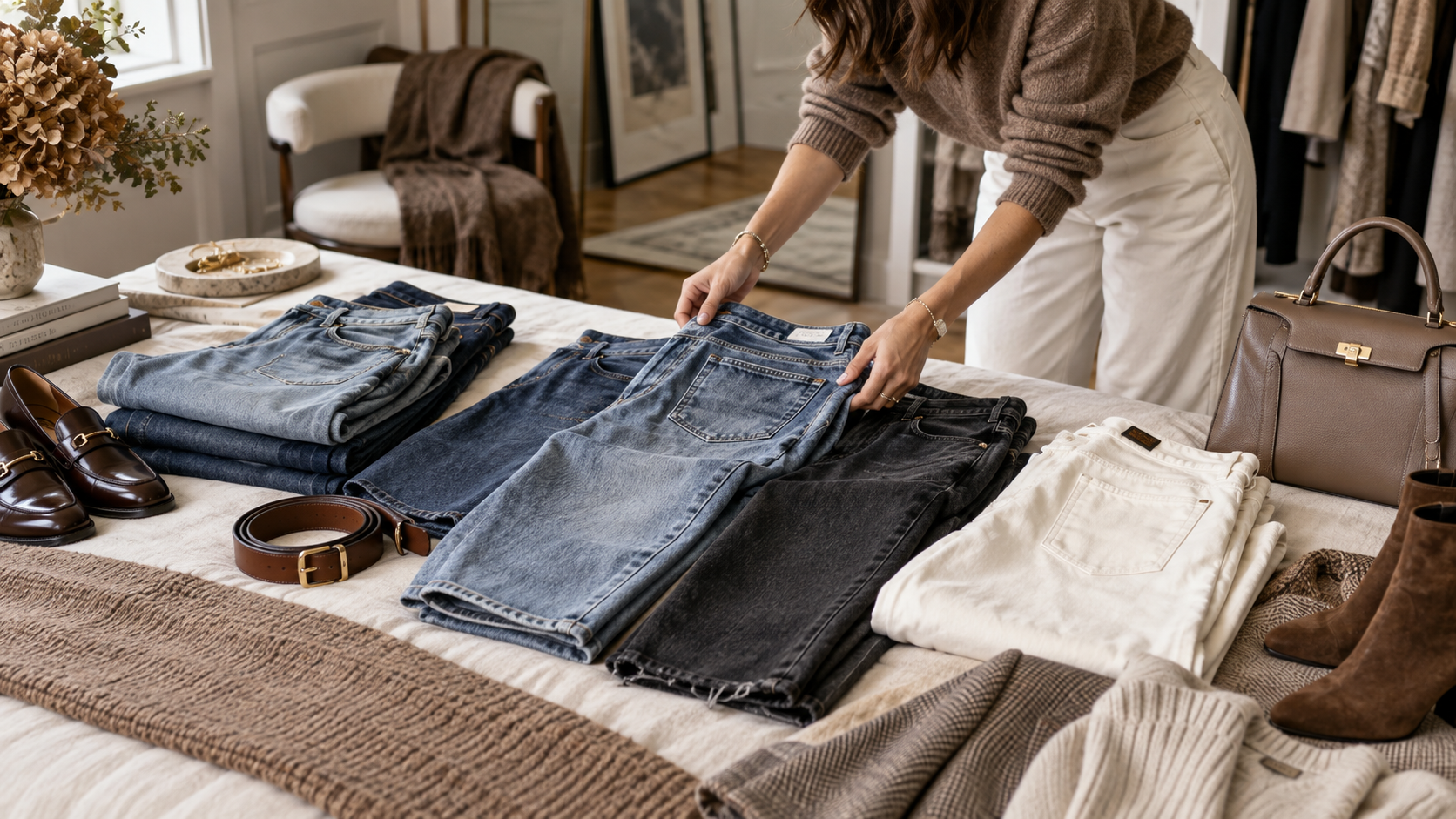
Jeans have a special talent for making a wardrobe feel more complicated than it needs to be.
You can own six pairs and still reach for the same one every time. You can have jeans that technically fit but somehow never feel right. You can keep a pair from five years ago because “maybe they’ll work with boots,” even though they have not worked with anything since approximately three apartments ago.
And then fall arrives.
Suddenly denim matters again. The weather cools. Routines return. Sandals start giving way to loafers, flats, sneakers, and boots. You want easy outfits, but your jeans are sitting there like a group project no one agreed to lead.
Before buying new jeans for fall, do a denim check.
Not a dramatic closet cleanout. Not a body-shaming try-on marathon. Not a punishment for past shopping decisions.
A denim check is a simple way to figure out which jeans to keep, tailor, replace, or resell so your fall wardrobe actually works.
Quick answer: before fall, sort every pair of jeans into four categories
To audit your jeans before fall, try on each pair and place it into one of four categories:
- Keep: jeans that fit well, feel good, and work with your current outfits.
- Tailor: jeans that are close but need hemming, waist adjustment, or a small fix.
- Replace: jeans that are worn out, uncomfortable, outdated for your style, or no longer useful.
- Resell or donate: jeans in good condition that no longer fit your body, style, or life.
The goal is not to own the most denim. The goal is to own jeans you actually wear.
Why you should check your jeans before buying new ones
Fall shopping makes denim feel urgent.
Everywhere you look, there are new washes, new cuts, new rises, new lengths, new “essential” silhouettes, and at least one pair of jeans being described as life-changing by someone who may or may not sit down during the day.
But before you buy more denim, check what you already own.
A denim audit helps you see:
- Which jeans you actually wear
- Which pairs still fit your body today
- Which jeans work with your fall shoes
- Which pairs need tailoring
- Which pairs are duplicates
- Which jeans no longer match your style
- Which gaps are real
- Which gaps are just trend pressure wearing a nice wash
This matters because jeans are not just single items. They are outfit anchors. If your jeans do not work, a lot of outfits become harder.
A good pair of jeans can support work-from-home days, casual dinners, errands, travel, school drop-off, office casual looks, weekend outfits, and “I need to look pulled together but cannot emotionally support a trouser right now” moments.
A bad pair of jeans, meanwhile, can ruin an otherwise perfectly innocent morning.
Step 1: Pull out every pair of jeans
Start by gathering all your denim bottoms.
Do not edit yet. Just gather.
If you find jeans in storage that you forgot existed, do not panic. They have been living their own quiet denim life. Now they must answer some questions.
Step 2: Try them on with real fall shoes
This is important.
Do not judge jeans barefoot unless you plan to spend fall barefoot, which seems unlikely and also chilly.
Try jeans with the shoes you actually wear or plan to wear:
- Sneakers
- Loafers
- Ballet flats
- Ankle boots
- Tall boots
- Clogs
- Mary Janes
- Flat sandals for warm fall climates
- Low heels
- Work shoes
Jeans can look completely different depending on the shoe.
A cropped jean may be perfect with flats but awkward with ankle boots. A wide-leg jean may need a platform or a hem. A straight-leg pair may work with sneakers but bunch weirdly over loafers. Skinny jeans may be useful with tall boots even if they are no longer your everyday favorite.
Fit is only part of the decision. Styling matters too.
Step 3: Use the denim fit test
For each pair of jeans, check fit, comfort, movement, and outfit potential.
Ask:
- Can I sit comfortably?
- Can I walk normally?
- Does the waistband dig, gap, or slide?
- Does the rise feel right for my body and tops?
- Do the jeans pull across the hips, stomach, thighs, or seat?
- Is the length right for my shoes?
- Do I like the back view?
- Do I keep adjusting them?
- Do I feel like myself in them?
- Would I wear them this month?
That last question is powerful.
Not someday. Not after a lifestyle transformation. Not when the right top appears. This month.
Your jeans need to work for your current body, current wardrobe, and current life.
Step 4: Sort your jeans into keep, tailor, replace, or resell
Now make decisions.
Not forever decisions. Not moral decisions. Just useful wardrobe decisions.
Category 1: Keep
Keep jeans that are actively useful.
A pair belongs in the keep category if:
- It fits your body today
- It is comfortable enough to wear for several hours
- It works with shoes you actually own
- It supports multiple outfits
- It matches your current style
- It is in good condition
- You reach for it regularly or know exactly how to wear it
Good keep examples:
- Dark straight-leg jeans that work with loafers, boots, and sneakers
- Relaxed jeans you wear on weekends and travel days
- Black jeans that make casual outfits look sharper
- White or cream jeans that transition well into early fall
- Wide-leg jeans that fit well and pair with your current tops
- Skinny jeans you still wear with tall boots or long sweaters
Keeping jeans is not about whether they are trending. It is about whether they work.
If you love your skinny jeans and wear them confidently, keep them. The denim police are not coming. They are busy arguing about barrel jeans on the internet.
Category 2: Tailor
Some jeans are not wrong. They are just unfinished.
Tailoring can turn almost-right jeans into useful jeans, especially if the fabric, wash, and general fit are good.
Consider tailoring jeans if:
- The waist gaps but the hips fit
- The length is wrong
- The leg shape would work better cropped
- The hem feels dated but could be updated
- The jeans need a button, rivet, zipper, or pocket repair
- The fit is good except for one fixable issue
- You would wear them often if adjusted
Common denim alterations include:
- Hemming
- Original hem shortening
- Waist adjustment
- Tapering the leg
- Taking in the seat
- Repairing holes or worn areas
- Replacing buttons or zippers
The key question is: Would I actually wear these if they were tailored?
If yes, tailoring may be worth it.
If no, do not spend money trying to turn “meh” into magic. Tailoring is powerful, but it is not a personality transplant for jeans.
When jeans are worth tailoring
Tailoring may be worth it if:
- The jeans are high quality
- You love the wash
- The denim feels good
- The alteration is simple
- The jeans fill a real wardrobe need
- The cost of tailoring is less than replacing them
- You have already worn them and want to wear them more
For example:
A pair of full-length straight jeans that fits perfectly through the hips but is too long? Hem them.
A pair of expensive wide-leg jeans with a gaping waist but perfect leg shape? Tailor the waist.
A pair of jeans that only needs a new button? Repair them.
But if the jeans are uncomfortable everywhere, the rise feels wrong, the denim is stiff in a bad way, and you only like the idea of them, let them go.
Category 3: Replace
Replace jeans when they used to serve a real role but no longer do.
A pair belongs in the replace category if:
- It is worn out
- It has lost shape
- It is uncomfortable
- It no longer fits your body
- It does not work with your shoes
- It does not match your current style
- You keep trying it on and taking it off
- It fills a wardrobe role you still need, but this pair is no longer the right one
Good replacement examples:
- Your everyday jeans are stretched out and sagging by lunch
- Your black jeans are faded in a way that looks tired, not cool
- Your only work-casual jeans are too distressed
- Your jeans only work with shoes you no longer wear
- Your favorite pair is wearing thin at the inner thigh
- Your current denim selection does not include any comfortable full-length pair for cooler weather
Replacing is not the same as shopping out of boredom.
A true replacement has a job.
You are not buying “new fall jeans.” You are replacing the jeans that used to support five outfits and now support exactly zero.
Category 4: Resell or donate
Some jeans are still good. They are just not good for you anymore.
Resell, donate, or pass along jeans if:
- They are in good condition
- They no longer fit comfortably
- They no longer match your style
- You have better versions
- You have not worn them in a year
- They create guilt every time you see them
- They are too nice to sit unworn
- Someone else would actually use them
Reselling can be a great option for denim because jeans often have strong secondhand demand, especially if they are from a recognizable brand, in good condition, and have a current or classic cut.
Donate pairs that are wearable but not worth reselling.
Recycle pairs that are damaged beyond wear, if textile recycling is available near you.
The point is not to punish yourself for outgrowing a pair. Bodies change. Style changes. Routines change. Denim should not get lifetime tenure just because it once looked great in 2019.
How many pairs of jeans do you actually need?
There is no universal number.
The right number depends on your lifestyle, climate, laundry habits, work dress code, and how often you wear denim.
But most people benefit from having a few clear denim roles, rather than a random pile of “maybe” jeans.
A useful fall denim wardrobe might include:
- One everyday blue jean
- One darker or more polished jean
- One relaxed casual jean
- One black, white, cream, or seasonal neutral jean
- One silhouette that works with boots or fall shoes
That may be three pairs. It may be five. It may be more if denim is central to your style.
The question is not “How many jeans should I own?”
The better question is: Do my jeans cover the outfits I actually wear?
The five denim roles to check before fall
Instead of thinking by trend, think by job.
1. The everyday jean
This is the pair you reach for without thinking.
It should be comfortable, versatile, and easy to style.
Common options:
- Straight-leg jeans
- Relaxed jeans
- Slim-straight jeans
- Soft wide-leg jeans
- Full-length jeans
Wear with:
- Tees
- Button-down shirts
- Lightweight knits
- Blazers
- Sneakers
- Loafers
- Flats
- Ankle boots
If you only keep one pair in top rotation, make it this one.
2. The polished jean
This pair works when you want denim but still need to look put together.
Look for:
- Dark wash
- Black
- Cream
- White
- Clean hem
- Minimal distressing
- Good structure
- A flattering rise
Wear with:
- Blazer
- Button-down
- Silk or satin blouse
- Knit top
- Loafers
- Ballet flats
- Low heels
- Ankle boots
Polished jeans are useful for casual offices, dinners, travel, meetings, and days when trousers feel too formal but leggings are absolutely not invited.
3. The casual jean
This is your off-duty pair.
It might be relaxed, faded, soft, distressed, or loose. The point is comfort and ease.
Wear with:
- Sweatshirts
- Tees
- Oversized shirts
- Sneakers
- Clogs
- Flat sandals
- Denim jackets
- Cardigans
A casual jean should still feel intentional. Comfortable does not have to mean “these have emotionally given up.”
4. The seasonal neutral jean
This is the pair that gives your fall outfits more range.
Options include:
- Black jeans
- White jeans
- Cream jeans
- Ecru jeans
- Grey jeans
- Chocolate or brown denim
- Dark indigo
These can make outfits feel fresher than default blue denim.
Try:
- Cream jeans + navy sweater + loafers
- Black jeans + white shirt + blazer
- Ecru jeans + olive jacket + brown boots
- Grey jeans + charcoal knit + flats
- Dark indigo jeans + burgundy top + ankle boots
Seasonal neutral denim can help you build more outfits without needing more statement pieces.
5. The shoe-specific jean
Some jeans are worth keeping because they work with specific fall shoes.
For example:
- Skinny jeans with tall boots
- Cropped straight jeans with loafers
- Full-length wide-leg jeans with platforms
- Bootcut jeans with ankle boots
- Straight-leg jeans with sneakers
- Flare jeans with heeled boots
This is why trying jeans with shoes matters.
A pair that looks awkward barefoot may work beautifully with the right shoe. A pair that looks fine barefoot may fail completely with the shoes you actually wear.
Fashion, as always, enjoys making us do the full experiment.
Which jeans are worth keeping even if they are not trending?
Keep jeans that work for you.
Trend relevance is only one factor, and honestly, not the most important one.
Keep:
- Skinny jeans if you wear them with tall boots or long layers
- Straight jeans if they work with most of your shoes
- Wide-leg jeans if they feel current and comfortable
- Dark denim if it supports polished outfits
- White or cream jeans if you wear them beyond summer
- Black jeans if they fill your casual-polished role
- Bootcut or flare jeans if they suit your style and shoes
- Relaxed jeans if they are your everyday pair
Do not get rid of a pair just because a trend report told you to.
Also do not keep a pair just because it might come back.
Everything comes back eventually. That does not mean your closet should become a denim archive with rent-free tenants.
Signs your jeans no longer work
Sometimes the answer is obvious. Sometimes it is not.
Here are signs a pair may need to leave your main wardrobe:
- You always change out of them before leaving
- You only like them from the front
- They require constant pulling up
- The waistband digs when you sit
- The fabric bags out quickly
- The rise feels wrong with your tops
- The wash does not work with your current style
- The length looks awkward with your shoes
- They make you feel bad about your body
- You have not worn them in a year
- You own better pairs in the same category
The most important sign: you do not feel good wearing them.
That is enough.
Your jeans are not allowed to bully you from a hanger.
What jeans should you buy for fall?
Only buy jeans after you know the gap.
Possible real denim gaps include:
- You need a comfortable everyday pair
- You need a polished dark wash
- You need jeans that work with loafers
- You need full-length jeans for cooler weather
- You need a pair that fits your current body
- You need black or cream denim to expand outfits
- You need jeans without distressing for work or dinners
- You need a replacement for a worn-out favorite
Before buying, ask:
- What role will this pair play?
- What shoes will I wear with it?
- Can I make at least five outfits with it?
- Does it fit comfortably sitting and standing?
- Does it work with my tops and layers?
- Is it different enough from jeans I already own?
- Would I wear it this month?
If you cannot answer those questions, you may not need new jeans yet. You may need more outfit clarity.
Denim shopping tips if you do need a new pair
If you decide to replace or add a pair of jeans, shop with a plan.
Know your preferred rise
Try on high-rise, mid-rise, or low-rise depending on what works with your body and tops.
High-rise often works well with tucked tops, cropped layers, and defined waist outfits.
Mid-rise can feel easier and more relaxed with a wider range of tops.
Low-rise may work if it suits your style and feels comfortable, but make sure it works with your actual shirts and sweaters.
Check the fabric content
Rigid denim holds shape but may need breaking in.
Stretch denim can be comfortable but may bag out depending on fabric quality.
A small amount of stretch can be helpful. Too much stretch can make jeans lose structure quickly.
Test the seat and knees
Sit, bend, and move.
Check whether the knees bag, the waistband digs, or the back gaps.
Do not buy jeans based only on standing still. Standing still is not a lifestyle.
Bring or wear the right shoes
If you are shopping in person, wear the shoes you want the jeans to work with.
If you are shopping online, try the jeans at home with your real shoes before deciding.
Check the return policy
Jeans are hard. Return policies matter.
Order only if you can try them properly and return what does not work.
Tailoring vs. replacing jeans: how to decide
Use this rule:
Tailor if the jeans are mostly right. Replace if the jeans are fundamentally wrong.
Tailor when:
- Waist is slightly too big
- Length is wrong
- Hem needs updating
- Minor repair is needed
- Shape is good but needs refinement
- You love the denim and wash
Replace when:
- Rise feels wrong
- Denim is uncomfortable
- Jeans are too tight or too loose in multiple areas
- Style no longer fits your wardrobe
- Fabric is worn out
- You never reach for them
- Alterations would cost more than the jeans are worth to you
Tailoring is best for fixing one or two specific issues.
It is not a rescue mission for jeans you secretly dislike.
How to resell jeans
If your jeans are in good condition, reselling can give them a second life and help fund something more useful.
Before listing, check:
- Brand
- Size
- Style name if available
- Measurements
- Condition
- Fabric content
- Rise
- Inseam
- Leg opening
- Wash
- Any flaws
Take photos in natural light, including:
- Front
- Back
- Tags
- Hem
- Pockets
- Close-up of fabric
- Any wear or damage
Be honest about condition. Denim buyers often care about measurements, so include them if possible.
Good keywords for listings:
- Straight-leg jeans
- High-rise jeans
- Wide-leg jeans
- Dark wash denim
- Vintage-style denim
- Black jeans
- White jeans
- Bootcut jeans
- Relaxed jeans
- Cropped jeans
If resale feels like too much work, donate instead. The goal is movement, not turning your closet into a second job with worse lighting.
How to use OpenWardrobe for your denim check
OpenWardrobe can make your denim audit much easier.
Start by adding or reviewing all your jeans in your digital wardrobe. Then look at:
- Which jeans you wear most
- Which jeans you have not worn recently
- Which pairs appear in saved outfits
- Which jeans work across multiple seasons
- Which pairs are duplicates
- Which pairs need notes like “tailor hem” or “works with boots only”
Create tags or notes such as:
- Keep
- Tailor
- Replace
- Resell
- Everyday denim
- Work denim
- Fall jeans
- Boot-friendly
- Needs hem
- Too big at waist
- Try with loafers
- Resale candidate
Then build outfits with each pair before buying new denim.
For example, take one pair of straight-leg jeans and create:
- One work-casual outfit
- One errand outfit
- One dinner outfit
- One transition-weather outfit
- One outfit with fall shoes
If a pair cannot support any outfits you actually want to wear, that is useful information.
If one pair supports eight outfits, protect her at all costs.
Denim outfit formulas for fall
Use these formulas to test whether your jeans deserve space in your wardrobe.
Formula 1: Everyday denim
Wear:
- Straight-leg jeans
- Tee or tank
- Button-down shirt or cardigan
- Sneakers or flats
Why it works: simple, repeatable, and useful for routine days.
Formula 2: Polished denim
Wear:
- Dark-wash or black jeans
- Blouse or knit top
- Blazer
- Loafers or ankle boots
Why it works: denim feels elevated without becoming fussy.
Formula 3: Warm fall denim
Wear:
- Blue jeans
- Lightweight sweater
- Belt
- Loafers or ballet flats
Why it works: early fall energy without overheating.
Formula 4: White or cream denim for fall
Wear:
- Cream jeans
- Navy, olive, chocolate, or charcoal top
- Brown belt
- Loafers or boots
Why it works: light denim becomes seasonal with richer colours.
Formula 5: Casual weekend denim
Wear:
- Relaxed jeans
- Sweatshirt or striped tee
- Sneakers
- Crossbody bag
Why it works: comfortable but still intentional.
Formula 6: Dinner denim
Wear:
- Dark jeans
- Better top
- Jewelry
- Flats, sandals, or low heels
- Small bag
Why it works: easy, flattering, and realistic for casual dinners.
Formula 7: Boot denim
Wear:
- Skinny, slim-straight, bootcut, or full-length straight jeans
- Knit top
- Jacket
- Boots
Why it works: the jeans are chosen around the shoe, which is often the deciding factor.
Your fall denim checklist
Use this checklist before buying new jeans:
- I tried on every pair of jeans I own
- I tested them with fall shoes
- I checked fit while sitting and standing
- I sorted each pair into keep, tailor, replace, or resell
- I identified my everyday jean
- I identified my polished jean
- I identified my casual jean
- I checked whether I need a seasonal neutral jean
- I noted which jeans need tailoring
- I built outfits before buying new denim
- I made a shopping list based on actual gaps
If you cannot check these boxes yet, you may not need new jeans. You may need a better denim plan.
Less glamorous. More useful.
FAQ: Denim check before fall
How do I know which jeans to keep?
Keep jeans that fit comfortably, work with your current shoes and tops, support multiple outfits, and make you feel good when you wear them.
How many pairs of jeans should I own?
There is no perfect number. Most people benefit from a few clear denim roles: everyday jeans, polished jeans, casual jeans, seasonal neutral jeans, and jeans that work with fall shoes.
Should I keep skinny jeans?
Yes, if you wear them and like them. Skinny jeans can still be useful with tall boots, long sweaters, tunics, oversized shirts, and certain jackets. Do not keep them only out of guilt, but do not remove them only because trends changed.
Are wide-leg jeans good for fall?
Wide-leg jeans can be great for fall if they work with your shoes and layers. Check the length carefully, especially with flats, sneakers, loafers, and boots.
Should jeans be tailored?
Jeans are worth tailoring if they are mostly right but need a small fix, such as hemming, waist adjustment, or repair. Replace them if the rise, fabric, or overall fit is wrong.
What jeans should I buy for fall?
Buy the pair that fills a real wardrobe gap. Common useful fall options include straight-leg jeans, dark-wash jeans, black jeans, cream jeans, relaxed jeans, or jeans that work well with boots and loafers.
How do I decide whether to resell jeans?
Resell jeans if they are in good condition but no longer fit, suit your style, or serve your wardrobe. Include clear photos, measurements, brand, size, wash, and condition in the listing.
How can I make old jeans feel current?
Try styling them with updated shoes, a belt, a modern top, a blazer, a better hem length, or a richer fall colour. Sometimes the jeans are fine; the outfit around them needs updating.
Final thought: your best jeans are the ones that work now
A denim check is not about chasing trends or getting rid of everything that is not currently being worshipped online.
It is about clarity.
Which jeans fit your body today? Which ones work with your shoes? Which ones make outfits easier? Which ones need tailoring? Which ones are ready to move on?
Before buying new jeans for fall, give your existing denim a fair try-on, a real styling test, and an honest decision.
Keep what works.
Tailor what is close.
Replace what has done its job.
Resell or donate what someone else could love now.
Your fall wardrobe does not need more denim confusion.
It needs jeans that show up, fit well, and make getting dressed easier.